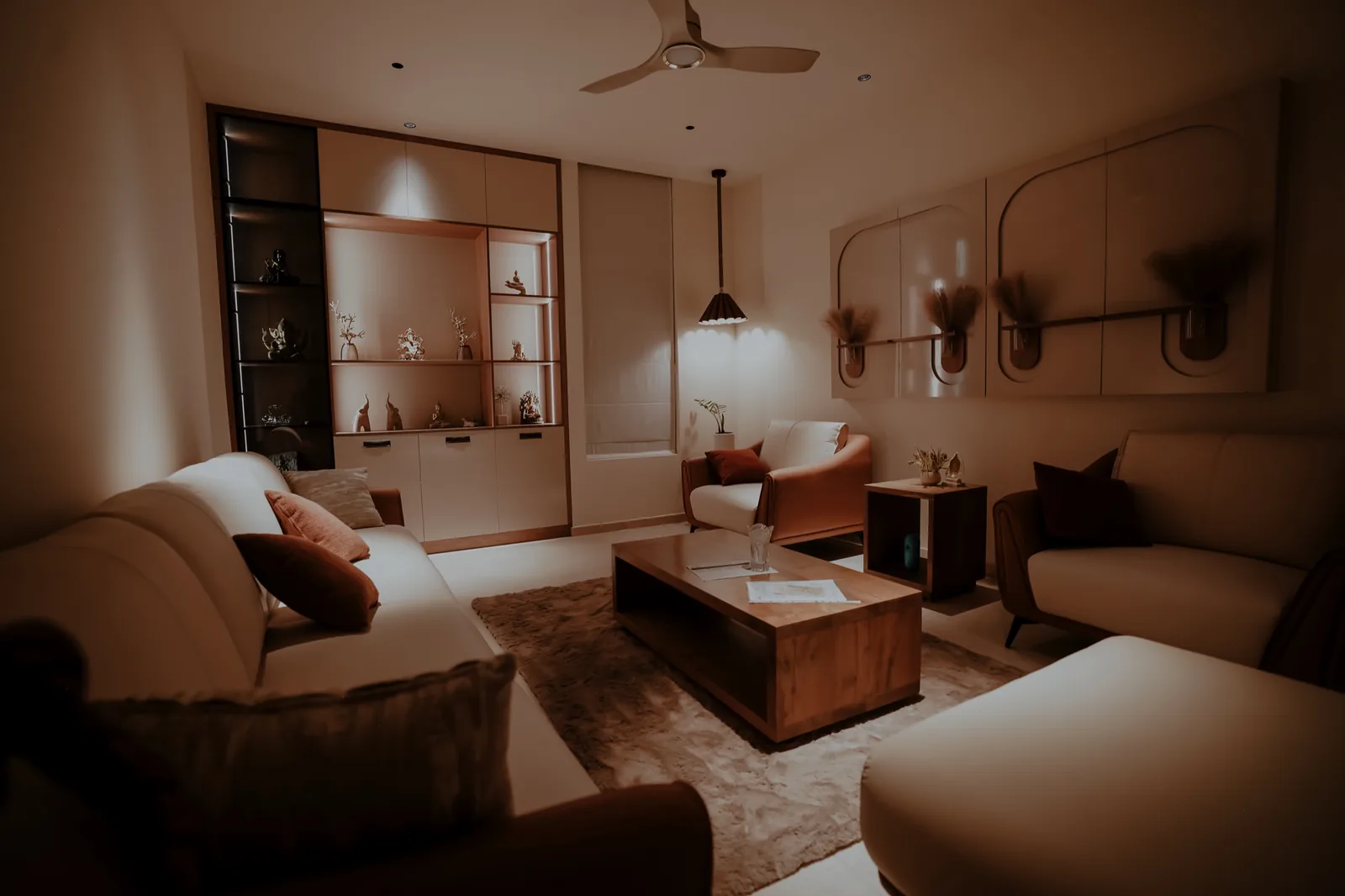
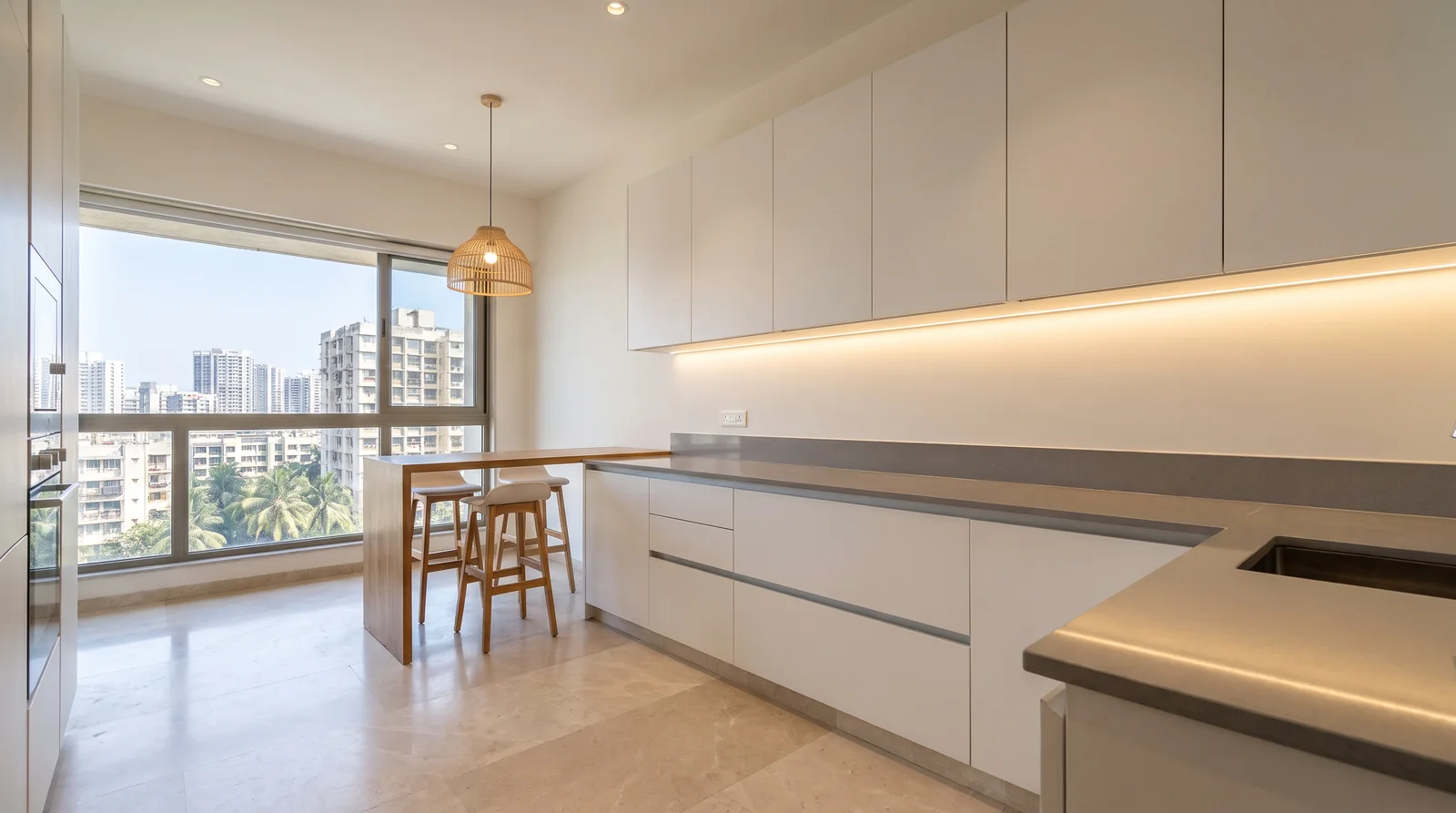
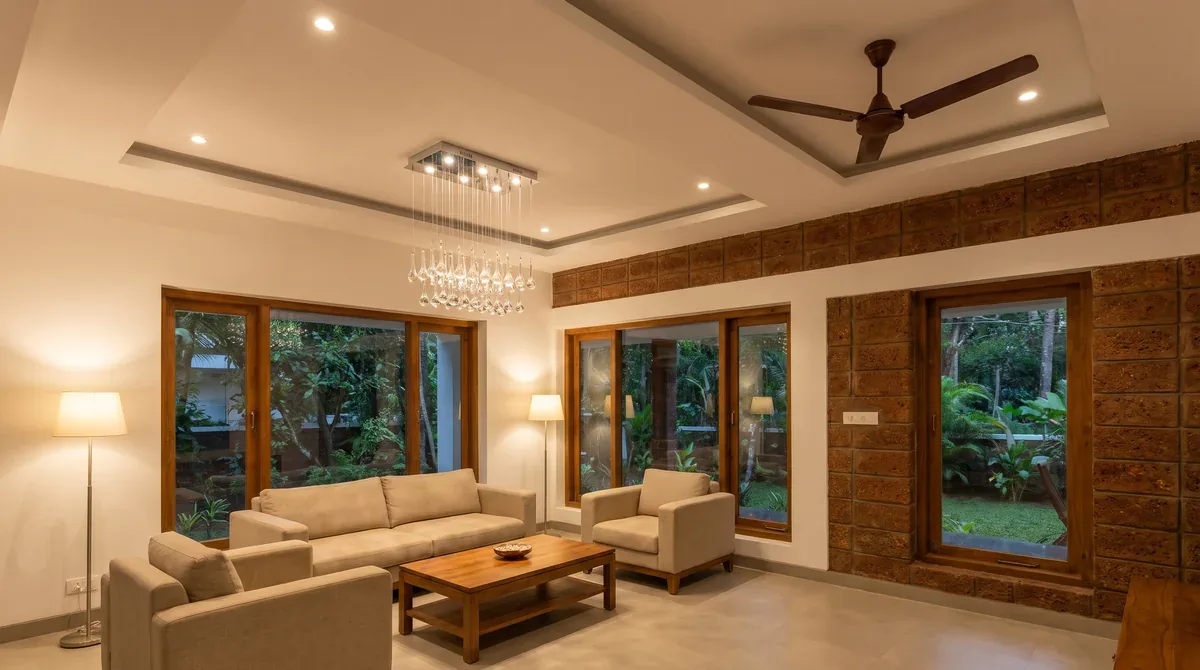
False ceiling lighting design: plan the ceiling around the light
- ✓Draw the furniture first, then the ceiling.
- ✓Cove, spots, and the decorative piece are three jobs, on three circuits.
- ✓The chandelier is fixed to the slab, not the gypsum or POP.
False ceiling lights are not one fitting. A false ceiling usually needs three: a hidden cove or profile for a soft wash, spots that do not glare, and a decorative piece on its own circuit. Draw the furniture first, and fix the chandelier anchor to the slab, not the board.
Design a false ceiling and its lighting together, before the gypsum closes. Place the three layers over the furniture, give each its own circuit, and leave the fan its own point.
Elor Lighting writes that plan. Ready fittings are at Celestial Lights. Design services are free*. *T&C apply.
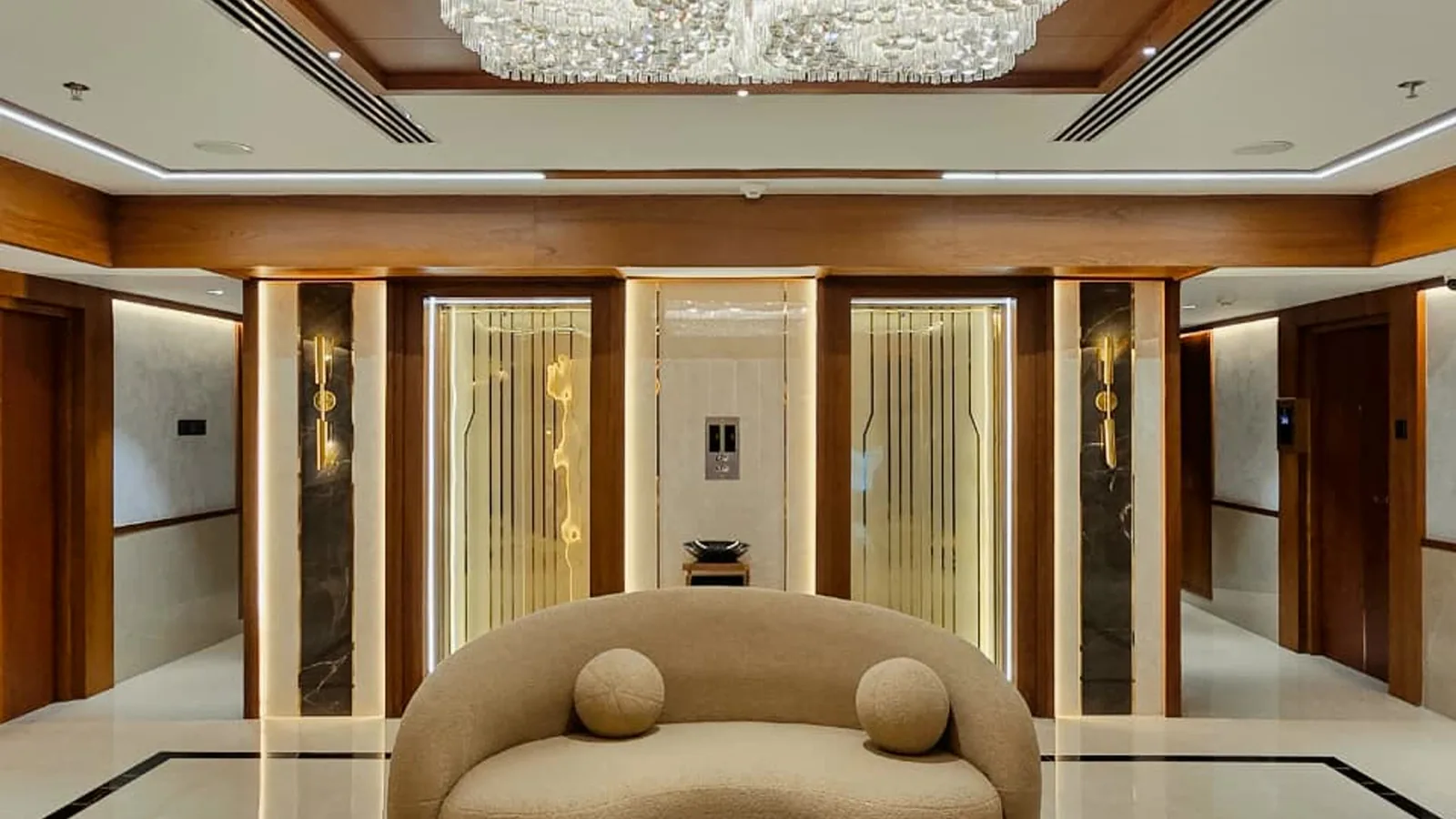
What false ceiling lights go into a home ceiling?
Three kinds, and you will hear them by their shop names.
- ✓Cove or profile light. An LED strip hidden in a lip or a channel at the edge of the ceiling. It washes the ceiling and walls with soft light. The cove guide covers the lip and the profile.
- ✓Recessed spots. Downlights set into the board, also sold as recessed lighting or concealed lights. They light a task, a path, or a wall. Place them where the furniture needs them, not in a regular grid across the room. Where each one goes is in the downlight placement guide, and why some of them hurt your eyes is in why a downlight glares.
- ✓A hanging piece. The chandelier or pendant over the seating or the table. It hangs from the slab through the false ceiling.
The names are the same for a gypsum board ceiling and a POP (plaster of Paris) ceiling. What changes the result is not the shop name but the order you plan them in. That order is the rest of this page.
What is ceiling and lighting design?
It is the order of the work, not a folder of photographs. A false ceiling in a Kerala home is usually gypsum or POP hung below the RCC slab, and the lighting decides how deep it needs to be, where it steps, and where the openings go. If the ceiling is drawn first and the lights are fitted into whatever space is left, the result is spots in the wrong places, a cove that shows its LED strip, and a chandelier with nothing solid above it.
The drawing that settles this is a reflected ceiling plan: the ceiling seen from below, with every light, every fan, every anchor, and every circuit marked. The method behind it is how a lighting plan is built.
Why should the furniture be drawn before the ceiling?
Because the light is for the furniture, not for the middle of the room. The sofa, the dining table, the bed, and the kitchen counter decide where the decorative piece hangs and where task light falls. A tray ceiling centred on the room but not on the seating puts the chandelier over the walkway. Fix the furniture layout, even roughly, and centre the ceiling features on it. Where a living and dining area share one long hall, as in many Kerala homes, each end gets its own ceiling feature and its own decorative light, rather than one tray stretched across both. If the furniture is likely to move, keep the decorative points flexible by marking two anchor positions while the ceiling is still open.
What do cove, spots, and the chandelier each do?
A cove washes the edge of the ceiling and makes the room feel taller and calmer; it is the light for a quiet evening. Spots mark a task or a path, or pick out a wall, a picture, or a shelf. The chandelier or pendant is the object in the room, the piece people notice. Put all three on one switch and the room has one scene, brighter or darker. On three circuits it has several, and that is most of what makes a room feel designed.
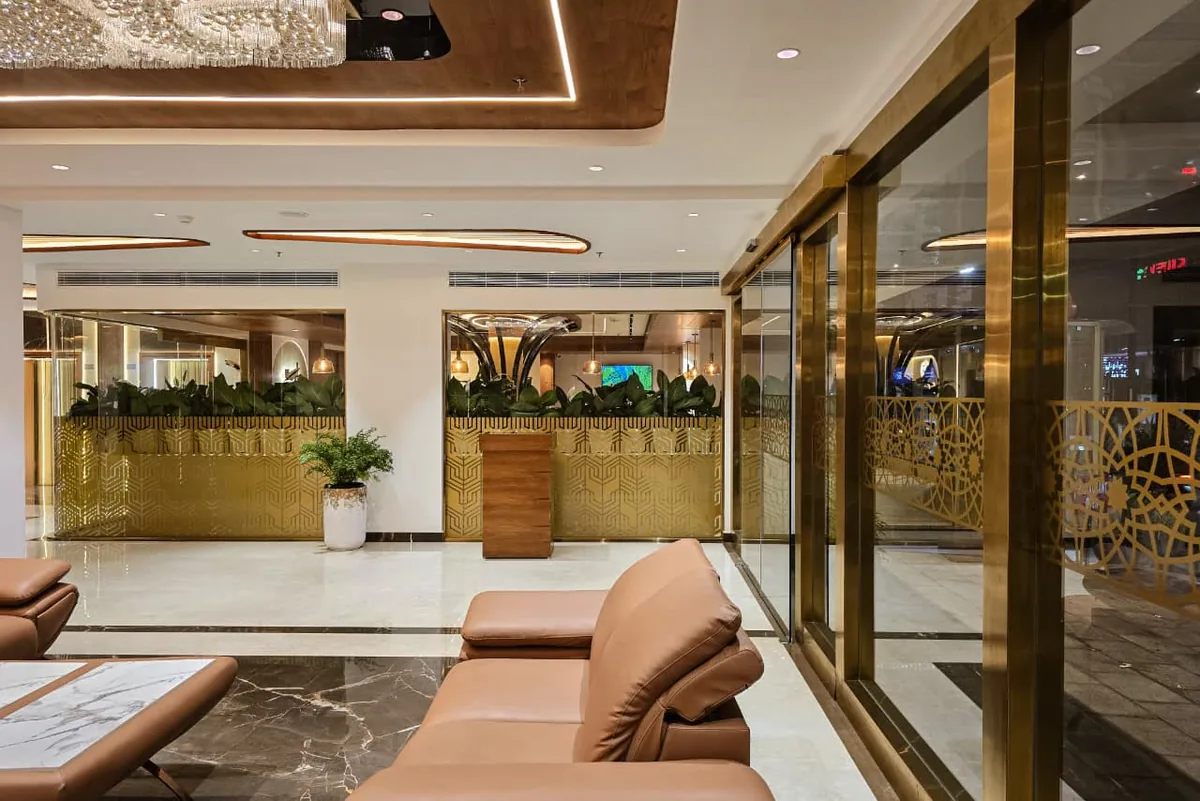
Agree the colour of the lamps once for the room, so the cove, the spots, and the chandelier match. The numbers are in Kelvin, CRI, and beam.
How deep should a false ceiling be for lighting?
Deep enough for the fittings you choose, which is why the fittings are chosen first. A downlight with a deep baffle, which hides the lamp from the sofa, needs more depth than a flat panel. A trimless fitting needs room behind the gypsum. A cove needs a lip high enough that the strip is not seen from across the room. If the lamp is visible from where people sit, the fitting was too shallow for the job. That is why a downlight glares. Ask for the depth each fitting needs from its data sheet before the ceiling height is fixed.
Can a false ceiling hold a chandelier?
No. Gypsum and POP are finishes, not structure. The chandelier anchor goes into the slab, at a point marked while the ceiling is open, and the false ceiling is built around it. The same applies to a heavy pendant. Leave it until after the ceiling closes and the choice is between cutting the ceiling and hanging something lighter than you wanted. The full sequence, and what each build-up can carry, is in the false-ceiling guide.
Where does the ceiling fan go?
On its own point, marked on the same drawing. Most Kerala rooms need a fan for much of the year, and the fan competes with the chandelier for the centre of the ceiling. Decide which one takes the centre, then place the other far enough away that the blades never reach it. A fan below downlights also flickers the light as the blades pass, so keep spots out of the circle the blades sweep. The usual layouts are in chandelier with a ceiling fan.
How does Kerala's humidity affect a false ceiling with lights?
Gypsum near a bathroom, under a leaking terrace, or beside a nalukettu courtyard open to the rain sees damp for months. Fittings in those ceilings should be chosen for damp air, and drivers placed where they can be reached without breaking the ceiling. Leave a way in: an access panel near the drivers and the junctions saves a lot of damage later. What fails first near the coast is in the coastal guide, and the ratings are explained in IP rating for outdoor lights.
How does this apply room by room?
The living room centres the decorative piece on the seating; see chandelier for a living room. The bedroom keeps spots away from the pillow; see bedroom lighting. The kitchen puts task light in front of the cook, not behind; see kitchen lighting. A double-height void hangs from the top slab; see staircase lighting. Whatever hangs from the ceiling has to be reachable for cleaning; the routine is in how to clean a crystal chandelier. For the whole house at once, see home lighting design.
Who draws the ceiling, and where do the fittings come from?
Elor writes the lighting plan, in DIALux where the room needs a calculation, and marks the anchors before the ceiling closes. Book a lighting consultation and start with a floor plan and a photo. Celestial Lights carries ready fittings for every room, at wholesale best rates, and can match any quote. A piece made for this ceiling is on custom chandeliers, and the chandelier shop guide lists what to ask anyone else.
Shelf, or made for the room?
- ✓Ready fittings for every room, including the ceiling, are shelf pieces at Celestial Lights.
- ✓A piece made for this ceiling, or a plan for the whole room, is Elor's work.
- ✓Custom pieces are usually ready in 3 to 6 weeks. We install custom lights and give installation support for everything else. Warranty is up to 5 years.
- ✓Kannur and Kozhikode are Celestial Lights stores. The Elor experience centre in Kochi is opening soon.
Want the plan before the piece? Book a consultation. What a custom piece costs is in the pricing guide.
Questions, answered
What lights go in a false ceiling?
Usually three: a cove or profile light at the edge, recessed spots for tasks and paths, and a hanging piece over the seating or table. Each goes on its own circuit, and the spots follow the furniture, not a grid.
What is ceiling and lighting design?
A marked ceiling that says where the cove, the spots, and the decorative piece go, which circuit each is on, and what the anchor is fixed to. It is drawn before the false ceiling closes.
Should the chandelier be the only light?
No. A single fitting in the middle leaves the walls dark and gives the room one level. Cove, spots, and task light stay in the plan. The chandelier sits on top of them.
Can a false ceiling hold a chandelier?
No. Gypsum and POP do not carry it. The anchor goes into the slab while the ceiling is open, and the false ceiling is built around it. The false-ceiling guide sets out the sequence.
Can I add lights after the POP is finished?
Yes, but it means cutting the finished ceiling, then patching and painting it again. A spot needs enough depth and a way to run the wire. A chandelier still needs a slab anchor, so the opening gets bigger. Marking every point before the POP closes is cheaper.
Why can I see the bulb in my false-ceiling downlights?
The fitting is too shallow, or the lamp sits too close to the opening. A deeper baffle or a recessed lamp hides it. Check the depth each fitting needs before the ceiling height is fixed.
Who draws the ceiling?
Elor writes the lighting plan, in DIALux where the room needs a calculation, and marks the anchor before the ceiling closes. You can start with a floor plan and a photo.
Where do the fittings come from?
Ready fittings are at Celestial Lights. Anything the ceiling still needs, and that the collection does not have, is designed and made by Elor, usually in 3 to 6 weeks. We install custom lights and give installation support for everything else.