Cove and profile lighting for Indian homes (Kerala tips)
Cove lighting is a hidden strip that washes the ceiling. Draw the recess, the lip, and the driver while the gypsum or POP is still open. If you can see the strip from the sofa, the lip is too shallow or the profile has no diffuser. Elor plans the ceiling. Design services are free*. *T&C apply.
- ✓Draw the cove before the gypsum or POP closes.
- ✓Hide the strip behind a lip or a profile, so you cannot see it from the sofa.
- ✓Put the cove on its own dimmer.
What a cove is, and what a profile is
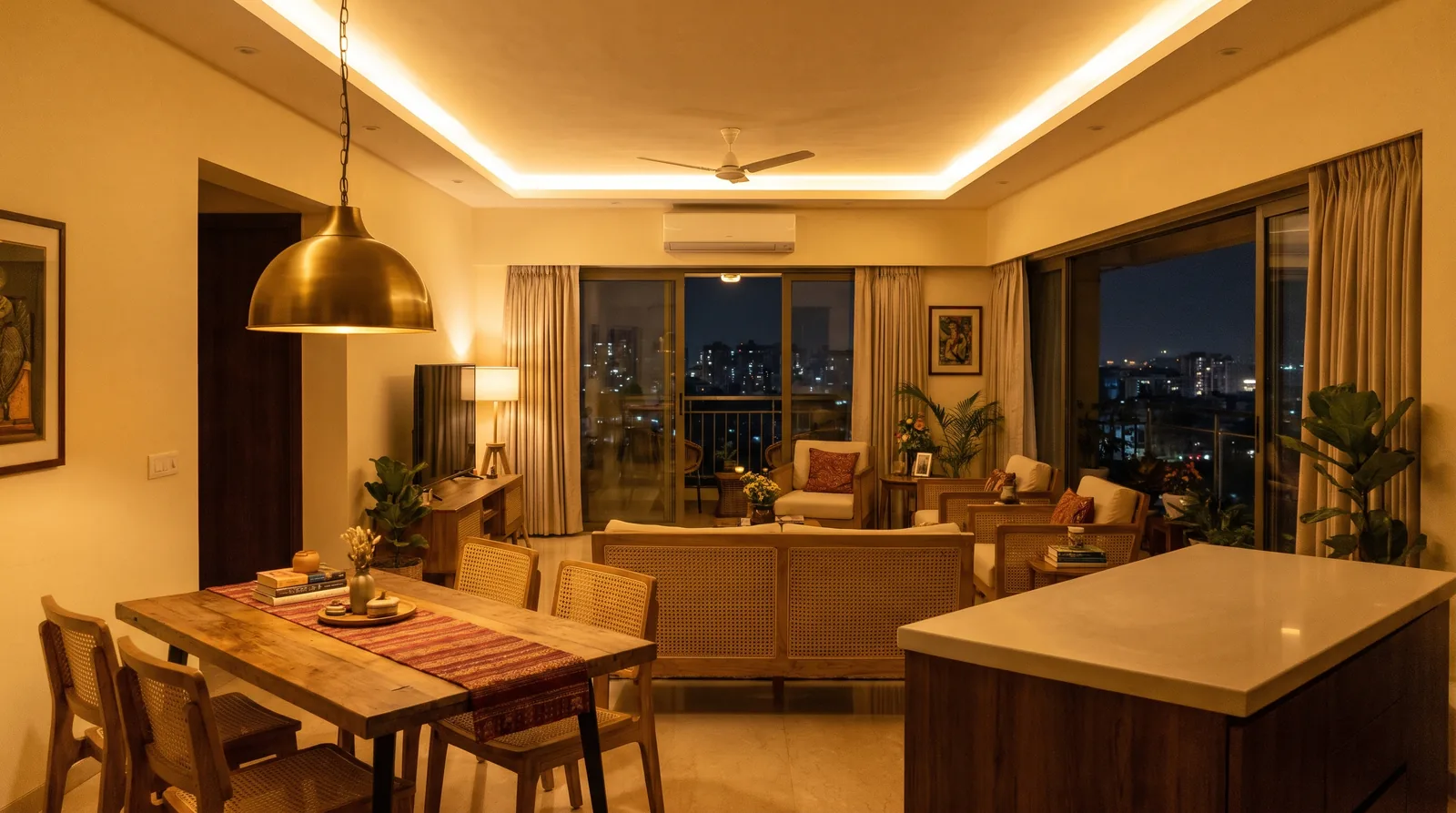
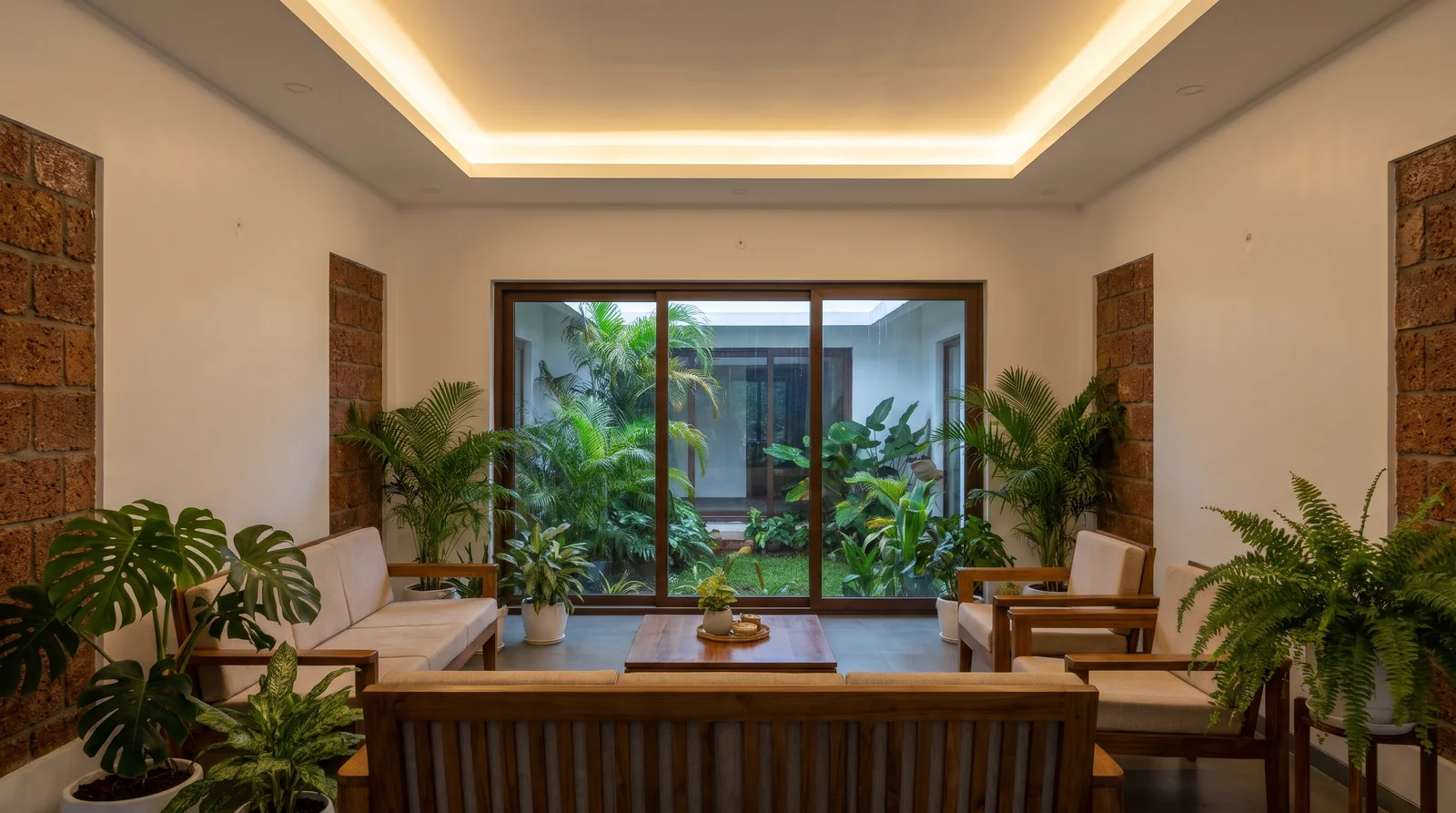
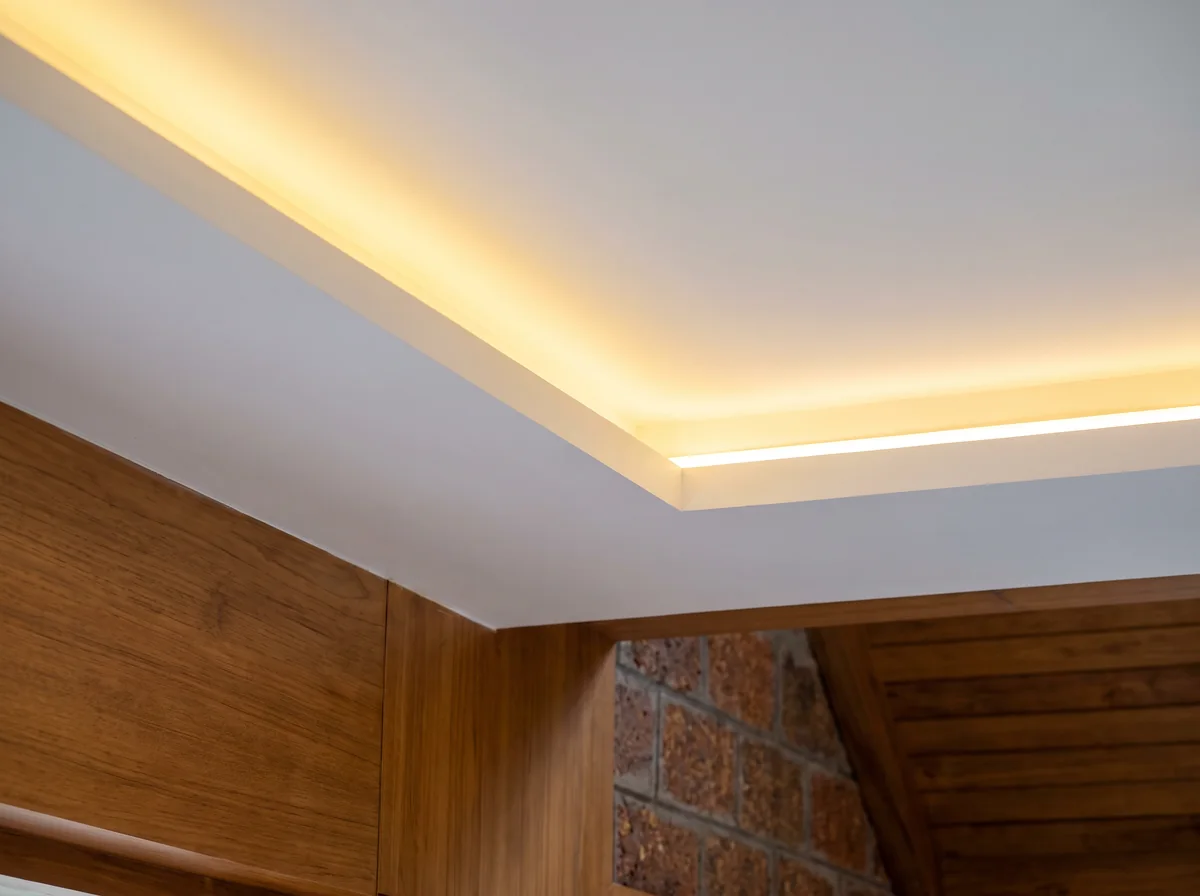
A cove is a recess in the false ceiling, usually at the edge or in a tray, that hides a strip of light and washes the ceiling above it. The light is meant to be seen as a glow, not as a row of dots.
A profile is the aluminium channel that holds the strip, often with a diffuser in front of it. The diffuser spreads the light so the individual lamps do not show. A cove and a profile often work together: the recess hides the hardware, and the profile keeps the strip straight and even.
This is not the same job as a downlight or a chandelier. Those light the room or the table. A cove lights the ceiling.
Draw it before the gypsum or POP closes
The carpenter and the electrician need a drawing while the ceiling is still open. That drawing should show:
- ✓the lip that hides the strip, and how deep the recess is
- ✓how the corners turn, so the strip does not break or glare at a join
- ✓where the driver sits, and how someone can reach it later
Once the gypsum or POP is closed, changing the lip or the depth means cutting the ceiling. If the house also needs a chandelier, the slab anchor is a separate job and has to be marked at the same time. That is in the false-ceiling guide. The cove is one part of a whole-ceiling plan; ceiling and lighting design shows how the pieces sit together, and how a lighting plan is built covers the order of work.
How to hide the strip
Stand where people sit, usually the sofa, and look up. If you can see the dots, the lip is too shallow or the profile has no diffuser. The fix is in the drawing, not in a brighter strip.
A shallow lip is a common miss in a hurry. So is a strip left bare in a recess that can be seen from the dining chair. Get the depth right before the boards go up.
Where a cove helps, and where it is not enough
A cove is good for a calm wash in a living room, a bedroom, or a passage. It is not the only light the room needs. You still want spots or a hanging piece for the table, the art, or a dark corner, and those should be on their own switches. A cove on a dimmer can carry a quiet evening; the brighter lights come on when the room has to work harder.
Spots that glare are a different problem, covered in why downlights glare. How to place those spots is in how to place downlights.
Do not mix colour temperatures in one room without a reason. If the cove is a different colour from the spots or the chandelier, the ceiling will look one way and the table another. The numbers on the box are explained in colour of light.
A rope light or a fluorescent tube is not the current default for a new cove. Use a proper strip in a profile, planned with the ceiling.
POP, gypsum, and damp rooms
A cove is a finish detail in the ceiling, not a structure. It does not change the rule that a chandelier is fixed to the slab, not to the gypsum or the POP.
In a damp room, or in a house close to the sea, be careful with the fittings and the drivers. The cautious notes are in coastal lighting in Kerala and IP ratings for outdoor lights. Ask the electrician to choose a fitting that suits the room.
Ready profiles, or a plan for the whole ceiling
Look for ready profiles, diffusers, and strips at Celestial Lights. Elor plans the ceiling, including the recess, the lip, and how the cove sits with the rest of the lights.
If the ceiling is still open, book a lighting consultation and draw the cove with the rest of the house.
Questions, answered
Can a cove replace downlights?
No. A cove gives a soft wash on the ceiling. It is not enough on its own for tasks, for a dining table, or for a dark corner. You still need spots or a hanging piece where the work happens, each on its own switch.
When does the carpenter need the drawing?
Before the gypsum or POP closes. The drawing should show the lip height, the depth of the recess, the corners, and where the driver sits, while the ceiling is still open.
Can I add a cove after the ceiling is finished?
Sometimes, but it usually means opening the ceiling at the edge and making that good again. It is cleaner to draw the cove before the ceiling closes.